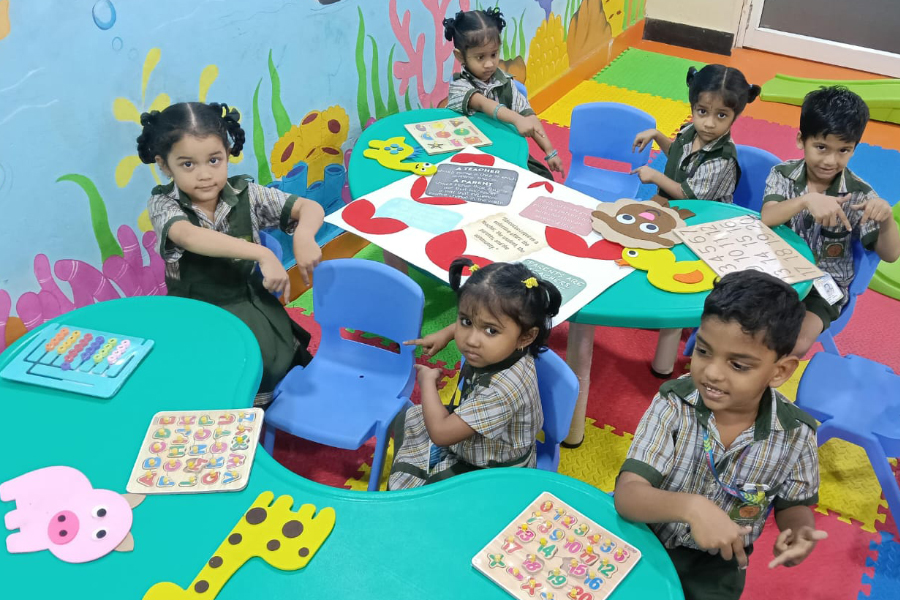
KINDER GARDEN
Kindergarten is a child’s first step into formal education. It is a crucial stage where young learners develop essential skills in a fun and engaging environment. The curriculum focuses on building foundational knowledge, social skills, and emotional development through interactive learning.
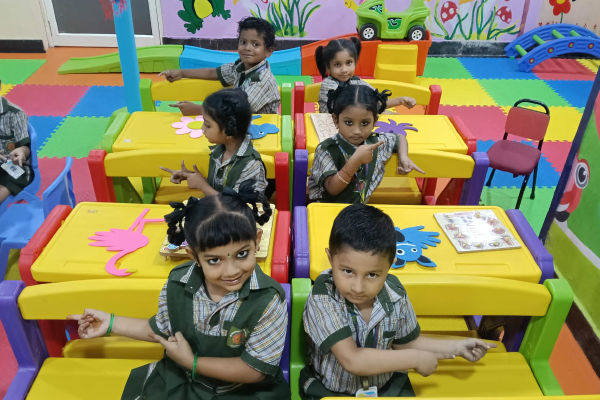
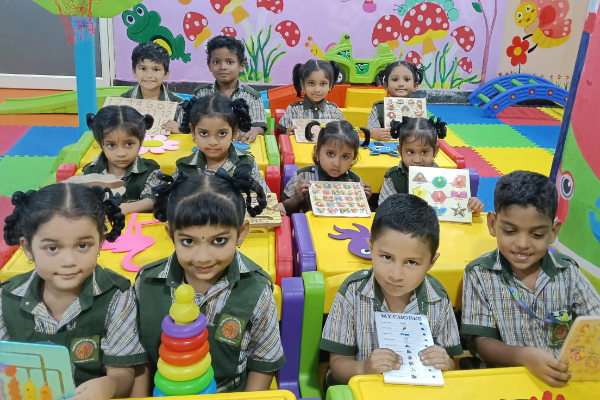
Key Areas of Kindergarten Learning
1. Language and Literacy
Kindergarten introduces children to letters, sounds, and basic words. Through storytelling, rhymes, and picture reading, they develop early reading and writing skills.
2. Numeracy and Logical Thinking
Basic number recognition, counting, and simple mathematical concepts help children understand the world around them. Activities include identifying shapes, patterns, and basic addition.
3. Social and Emotional Development
Children learn how to interact with others, express their feelings, and follow classroom rules. Activities like group play and storytelling help in building confidence and teamwork.
4. Creativity and Expressive Arts
Drawing, painting, music, and crafts encourage self-expression and imagination. These activities enhance motor skills and cognitive development.
5. Physical Development
Gross and fine motor skills are developed through movement-based activities such as running, jumping, and hand-eye coordination exercises. Outdoor play and yoga are also introduced for overall well-being.
6. General Awareness and Life Skills
Children are introduced to basic concepts like personal hygiene, healthy eating, and the environment. They also learn about seasons, animals, and community helpers.
Conclusion
Kindergarten is a foundation for lifelong learning. A well-structured program that blends education with play ensures that children develop cognitive, social, and emotional skills, setting the stage for future academic success.